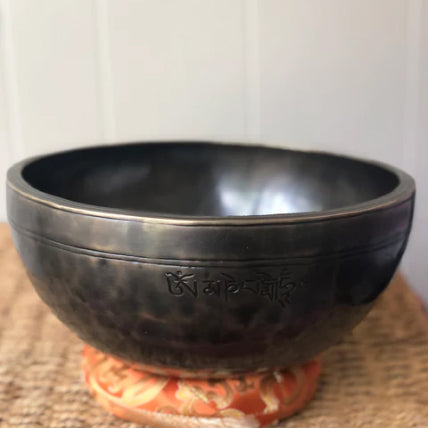




By The Ohm Store
The therapeutic impact of a singing bowl's presence is so beyond expectations that it can invite mystical and magical ideas to explain why something seemingly so simple...
Creates such a profound experience.
We've watched this moment occur across thousands of sessions, across different practitioners, different instruments, different clients, different rooms.
One does not need to believe in a spiritual, or religious or dogmatic point of view to be impacted. The sound stands apart from belief, because it is simply effective in a real way.
And so we have built our lives around these instruments because of their therapeutic value.
Because it is real, and because what is real deserves to be understood as completely as possible, so that it can serve people as fully as possible.
This article is that understanding. I'm going to go very deep in this article, and only 1% of people will appreciate the breadth of what I'm describing here.
Here's to you -- those that want to go deep.
It is also something the field has not yet had: an honest examination of which explanations for that moment are worthy of it, and which are not.
We write from love, not from skepticism. We write as people who have spent years in direct relationship with these instruments and the craftsmen who make them, who have run acoustic analysis on their output, who have studied the neuroscience of what they do to the human nervous system, and who believe without reservation, that the phenomena are real.
We write because real phenomena deserve real explanations. And because inadequate explanations have real costs: they direct practitioners toward the wrong criteria, they prevent clinical integration, they make the field easy to dismiss by people who might otherwise become its most powerful advocates, and they limit the reach of something that could help far more people than it currently does.
The instruments are extraordinary. They deserve explanations as extraordinary as they are.
Part One: What Makes an Explanation Good
Before we examine any specific claim in therapeutic sound, we need a tool for understanding what kind of claim we are looking at, what it actually asserts, and whether it has made genuine contact with reality.
That tool comes from the physicist philosopher David Deutsch, whose 2011 book The Beginning of Infinity offers an incredible account of what makes an explanation genuinely good. His central criterion is deceptively simple:
A good explanation is hard to vary.
This means something precise and demanding: every detail in a good explanation is there for a specific reason related to the phenomenon it explains. Change any element and the explanation gets worse.
I'm going to explain this idea of a "good explanation," according to Deutsch.
Consider Newton's law of gravitation. Every object attracts every other object with a force proportional to the product of their masses and inversely proportional to the square of the distance between them.
Parse this sentence carefully. "Every object" — not just large ones; change this and you predict small-object behavior differently from observation.
"Product of their masses" — not the sum, not the larger one; change this and the force prediction contradicts measurement.
"Square of the distance" — not the cube, not the first power; change the exponent and planetary orbits take shapes different from what Kepler documented. Every word is load-bearing.
The law is hard to vary.
Now consider: "Singing bowls heal because they resonate with your body's natural energy field."
Every element can be substituted freely. "Harmonize" for "resonate," "biofield" for "energy field," any instrument for "singing bowls." All without changing the claim's explanatory power, because there is no explanatory power to change.
The claim isn't specific to anything that singing bowls uniquely can do!
This distinction here is hard to vary versus easy to vary. This is not about being "scientific" versus "spiritual." It is not about Western versus Eastern. It is about whether an explanation has made genuine contact with the phenomenon it describes.
Easy-to-vary explanations are not merely useless. They provide a narrative that feels satisfying without doing the work of explanation.
Why Intelligent People Defend Mythological Frameworks
Here is the most important insight in this entire article, and it is one that Deutsch makes almost in passing: intelligence does not protect you from easy-to-vary explanations.
It makes you better at rationalizing them.
This is not a criticism of the brilliant practitioners who have built careers in therapeutic sound. It is the most generous possible explanation of how so many "bad explanations," persist in this field.
The human mind reaches for explanation naturally.
Experience something real and powerful, and your mind easily asks why.
If the why that is available comes from a tradition, from teachers, from a community of practice, from years of apparent confirmation, the mind accepts it.
The more intelligent the mind, the more elaborately it will construct justifications for what it has accepted. Intelligence in the absence of the specific practice of asking "what would falsify this?" produces better rationalization, not better reasoning.
We in this field use things like chakra-note correspondence (we do it too!) and seven sacred metals are, many of them, deeply gifted, deeply sensitive, genuinely skilled people who have correctly perceived real phenomena and have explained them through the frameworks available to them.
There is so much energy and momentum beyond ideas like this, that it's often easier to just use the language rather than stop and reconsider!
The frameworks evolved through a cultural selection process and so over time the dominant frameworks acquired structures specifically designed to resist correction.
We're aiming to offer a different framework. The hard-to-vary test.
What Good Explanations Do
Beyond being hard to vary, good explanations have a property Deutsch calls reach: they account for phenomena beyond those that prompted them.
Newton's gravitational theory was developed to explain planetary orbits. It reaches to tides, to the shape of the Earth, to the orbital mechanics of spacecraft, to the large-scale structure of galaxies. None of these were the problem Newton was solving. The reach is evidence of depth. Something closer to a deeper understanding of reality.
The mechanistic framework for singing bowls has exactly this reach.
The explanation of why a quality bell metal bowl affects the auditory brainstem in the way it does also explains why instrument quality matters clinically.
It reaches to explain why natural soundscapes are restorative, why acoustic poverty in urban environments has measurable health consequences, and why the people who most need this practice can access it without adopting a cosmological worldview first.
Part Two: What Is Actually Happening
We begin here because this is the foundation of everything. The phenomena are real. The mechanism is beautiful. And it is hard to vary in exactly the way Deutsch requires.
The Metallurgy of Acoustic Excellence
A bell metal singing bowl begins as a decision about alloy composition. 78% copper, 22% tin, the composition known as CuSn20 was made independently by metalworking cultures across Eurasia. In Nepal, in India, in China, in the ancient Near East. Cultures separated by mountains and oceans and centuries converged on the same composition.
It is convergent empirical discovery: different traditions running implicit experiments, selecting for acoustic quality across generations of making and listening, finding the same physical optimum by different paths.
The optimum is real. The copper-tin binary phase diagram explains it completely.
At approximately 22% tin by weight, the alloy reaches a specific microstructural state at room temperature: a mixture of alpha phase and delta phase, the intermetallic compound Cu₃₁Sn₈, harder and more complex in crystal structure.
The specific combination of these two phases at this specific composition produces two acoustic parameters that are critical.
The first is internal friction. How quickly vibrational energy converts to heat within the material. The alpha-delta microstructure of CuSn20 produces internal friction low enough that multiple vibrational modes ring out for fifteen to forty-five seconds rather than dying in milliseconds, but with enough microstructural complexity that the material supports many simultaneous modes rather than one dominant frequency. Softer alloys damp faster.
Higher tin content approaches a more brittle regime without proportional acoustic gain. The 22% composition is an optimum in the phase diagram of the copper-tin system, and the reason metalworking cultures on four continents found it independently is that the optimum is the same everywhere.
The second is the speed of sound in the material, determined by the elastic modulus and density — which places the modal frequencies of bowls in commonly made sizes squarely in the range of 100–3000 Hz: maximum auditory sensitivity, maximum amplitude-modulation processing capability in the human auditory brainstem.
The ancient metalworkers were right! They were astoundingly right! Now we know why.
Mode Splitting — The Engine of the Therapeutic Effect
Of all the acoustic phenomena in singing bowls, this is the most important and the least discussed.
A perfect cylindrical shell of perfectly uniform material would produce each of its vibrational modes as a degenerate pair, two orientations of the same mode shape at exactly the same frequency.
But no real handmade bowl is perfectly uniform. The hand-hammering process introduces small variations in wall thickness from point to point.
These variations in mass distribution lift the degeneracy: the two orientations of each mode shape now have slightly different effective masses, and therefore slightly different resonant frequencies.
When both orientations of a mode are simultaneously excited the acoustic result is the superposition of two sinusoids at nearly identical but not quite equal frequencies. These two frequencies combine to produce a single oscillation at the average frequency with an amplitude that oscillates at the difference frequency. This amplitude oscillation is the beat frequency.
The beat frequency is the primary perceptual signature of a quality bowl. The throb, the pulse, the shimmer that experienced listeners identify with an excellent instrument. And its rate falls, in bowls made by skilled traditional makers, consistently in the range of 1 to 8 Hz. The delta and theta brainwave range.
This alignment is the accumulated result of generations of makers selecting for acoustic quality, and generations of listeners selecting for the bowls that sound best to trained ears, and trained ears preferring, without knowing the mechanism, exactly what the auditory brainstem processes most powerfully.
The Inharmonic Spectrum and Why It Matters
The partials of a singing bowl are not in integer ratios to each other. They are inharmonic: their frequency ratios deviate significantly from integers, determined by the geometry of the curved shell rather than simple tension mechanics.
The human auditory system has evolved to recognize harmonic series like the signature of the human voice, animal calls, most musical instruments. When it encounters a harmonic complex, it performs harmonic template matching: recognizes the integer-ratio pattern, fuses the partials into a single perceived pitch, and can begin to background the sound.
Habituation follows recognition.
An inharmonic complex resists this process.
The auditory system cannot apply the harmonic template. It must track each partial semi-independently, demanding ongoing computational engagement. The bowl stays genuinely complex throughout its entire decay.
A quality bell metal bowl typically produces eight to eighteen simultaneous audible partials in inharmonic relationships. This is a sustained acoustic object that the brain is compelled to process.
The Brain as a Conjecture Machine
The neuroscientist Karl Friston has developed a framework called predictive processing that explains precisely why this matters for consciousness. The brain is not a passive receiver of sensory information. It is an active generative model, continuously producing predictions about what it expects to sense, comparing those predictions to actual sensory input, and updating its model based on the discrepancy — the prediction error.
David Deutsch would recognize this immediately. The brain is doing what he says all knowledge-generating systems must do: conjecturing, testing, updating on disconfirmation.
When the auditory cortex encounters a quality singing bowl's output — a complex inharmonic spectrum with beat frequencies in the theta range, evolving as different modes decay at different rates — it generates predictions about what will arrive next.
The bowl defeats these predictions.
The inharmonic partial relationships cannot be captured by harmonic templates learned from voice and most musical instruments. Prediction errors accumulate. These prediction errors are compelling. The auditory system is architecturally driven to continue processing.
This is why sound meditation is described as effortless compared to other forms.
Focused attention meditation asks the practitioner to direct attention deliberately and repeatedly return when it wanders. This requires ongoing effort. The bowl provides an acoustic structure that the brain is compelled to track by its own architecture. Attention is not directed. It is captured. The bowl does the work.
The Default Mode Network
In 2001, neuroscientist Marcus Raichle described a paradox: certain brain regions showed higher activity at rest than during any cognitive task being studied. These regions co-activated together at rest and deactivated together during focused external attention. He named this the Default Mode Network.
The DMN is the neural substrate of self-referential processing. Any mental content in which the self is the primary object. When you replay a past conversation, anticipate a future scenario, wonder what someone thinks of you, construct the ongoing narrative of who you are — this is the DMN operating. It is the circuit that generates and maintains the running story of the self.
It is also the neural substrate of much human suffering.
Major depression is associated with DMN hyperconnectivity and failure of the DMN to deactivate during tasks requiring external attention. The depressed brain is trapped in the self-referential mode. Anxiety involves DMN hyperactivation in forward-looking self-referential processing. PTSD involves DMN hyperactivation around trauma-related content that cannot be integrated.
The DMN deactivates during focused external attention. When the auditory cortex is processing a sustained acoustic stimulus that generates continuous prediction errors — the acoustic profile of a quality bell metal bowl — it demands metabolic resources. Those resources compete with the DMN's self-referential processing. The DMN dims. Not through willpower. Not through belief. Through resource competition between two neural systems that cannot both run at full capacity simultaneously.
This is the mechanism by which the voice in the head goes quiet during a sound bath. And this is why instrument quality is a clinical variable, not merely an aesthetic preference. A bowl that produces more acoustic complexity — more prediction errors, sustained over a longer decay — suppresses the DMN more effectively than a simpler instrument. The difference between a high-quality handmade bell metal bowl and a machine-turned alternative is not just tonal beauty. It is therapeutic efficacy, by a mechanism that is now specified precisely enough to be wrong.
The Vagus Nerve — Five Pathways
The vagus nerve is the longest nerve in the body, running from the brainstem through the neck, chest, and abdomen to innervate the heart, lungs, and gut.
Approximately 80% of its fibers are afferent, carrying information from the organs to the brain. High vagal tone correlates with lower resting heart rate, greater heart rate variability, lower resting cortisol, reduced inflammatory markers, and better emotional regulation.
Sound activates vagal pathways through five simultaneous anatomical routes.
The auricular pathway: The auricular branch of the vagus nerve innervates a specific region of the external ear. It is the only branch of the vagus that reaches the skin surface. Mechanical vibration at the external ear activates mechanoreceptors in this region, sending afferent signals directly to the vagal nuclei in the brainstem. This is the anatomical basis of transcutaneous auricular vagus nerve stimulation, a developing clinical technique with documented effects on heart rate variability and mood.
The middle ear pathway: The stapedius and tensor tympani have brainstem connections that modulate vagal outflow. Sustained moderate-amplitude sound activates these muscles, and their state influences vagal tone through brainstem pathways. The neuroscientist Stephen Porges identifies the middle ear muscles as central to his polyvagal theory, specifically linking their state to the physiological sense of safety.
The respiratory pathway: The long, predictable decay of a singing bowl tone spontaneously promotes paced, slow respiration in attentive listeners. Following a tone to near-silence naturally synchronizes with slow, deep breathing. Slow, paced breathing at approximately six breaths per minute maximally activates the respiratory sinus arrhythmia — the vagally-mediated component of heart rate variability. The bowl is a respiratory pacemaker operating through acoustic entrainment.
The vibrotactile pathway: At sufficient amplitude sound produces vibration detectable through skin mechanoreceptors. Pacinian corpuscles, Meissner corpuscles, and Ruffini endings provide afferent input that contributes to autonomic modulation through connections to the vagal brainstem nuclei.
The laryngeal pathway: Many practitioners tone, hum, or vocalize along with the bowls, and attentive listeners often find themselves subvocalizing, following the bowl's pitch. The laryngeal muscles are innervated by the recurrent laryngeal nerve, a branch of the vagus. Sustained vocalization is direct vagal activation — which is why toning and chanting practices in contemplative traditions across cultures are physiologically grounding.
Five simultaneous pathways!
This is why the therapeutic effect is robust — it does not depend on any single mechanism. And this is why the quality of the instrument matters: a bowl with longer sustain, richer mode splitting, more sustained complexity activates all five pathways more fully and for longer than a simpler instrument.
Part Three: The Major Claims, Examined With Love
The framework is now in place. Each claim below contains something real. Our task is to identify what is real, explain it correctly, and identify what has been added that has no mechanism, always with the understanding that the real explanation is more interesting than the mythology.
The Note/Chakra Correspondence — The Most Important Conversation in the Field
"What note is that bowl?"
This is the number one question we receive. It drives purchasing decisions across the entire category. It shapes how practitioners design sessions, how students are taught, how instruments are selected and marketed.
The framework behind the question: seven chakras correspond to seven musical notes. Root = C. Sacral = D. Solar Plexus = E. Heart = F. Throat = G. Third Eye = A. Crown = B. To heal a specific chakra, play the corresponding note.
We address this with complete respect for the contemplative framework of the chakra system, which has real value as a map of embodied experience, and with complete honesty about what the frequency correspondence claim actually asserts.
If chakras have specific resonant frequencies — real physical properties of real structures — then they have specific frequencies. Not four different specific frequencies depending on which system you consult. But four major systems of chakra frequency assignment exist simultaneously in the field right now: the C major scale system, the Solfeggio system, the planetary correspondence system, and several "scientific" derivations.
These systems disagree with each other substantially.
This internal inconsistency is diagnostic. If the assignment were real and were derived from a measurable property of an actual structure then systems would converge.
They don't converge because the assignments are not derived from the properties of the chakras. They are imposed from outside, and each system adjusts to accommodate whatever instruments or frameworks the practitioner already uses.
But here is what matters most practically: note is close to the least therapeutically significant acoustic variable we can measure. The mechanism by which a singing bowl affects the human nervous system depends on partial count, beat frequency structure, inharmonic complexity, and sustain duration.
None of these are determined by note.
A handmade bell metal bowl with fourteen active partials, beat frequencies at 4 Hz, rich inharmonic complexity, and thirty-five seconds of sustain — in any note — is therapeutically superior to a machine-turned bowl with three active partials, no beat frequency structure, and ten seconds of sustain in the "correct" chakra note. The note is irrelevant to the mechanism. Acoustic complexity is the name of the game when it comes to true, therapeutic impact.
When note becomes the primary selection criterion...
The conversation that matters most, about acoustic complexity, about mode splitting, about partial richness, becomes almost impossible to have.
The customer has already decided what they need based on a framework that does not map to the actual mechanism.
What to actually listen for when selecting a bowl:
- The number of simultaneous overtones, where more partials means more acoustic complexity means more sustained neural engagement
- The presence of amplitude modulation, that throb or pulse that indicates mode splitting and beat frequencies in the delta-theta range
- The duration of the sustain, longer sustain means more sustained activation of vagal pathways and DMN suppression
- The quality of inharmonic relationships. Accoustic complexity that resists habituation
Note matters as an aesthetic preference and as a factor in how bowls in a set interact with each other. It is not the primary therapeutic variable. And it is not determined by chakra anatomy.
Seven Sacred Metals
The claim: authentic Himalayan singing bowls are made from seven sacred metals, which consists of gold, silver, copper, tin, iron, mercury, and lead, corresponding to the seven classical planets and the seven chakras.
This sacred composition is the source of the bowl's healing power.
Spectroscopic analysis of hundreds of bowls tells a clear story: the vast majority are copper-tin alloy (bell bronze) with tin content typically between 18% and 24%.
The seven sacred metals narrative is not corroborated in the testing of even antique singing bowls.
But here is what the tradition was correctly sensing: alloy composition is genuinely, profoundly important to the bowl's acoustic properties.
The 22% tin composition is a physical optimum in the copper-tin phase diagram, producing the specific microstructural combination that gives bell metal its extraordinary acoustic properties.
The craft tradition found something real. It gave that real thing a cosmic explanation rather than a metallurgical one.
The real explanation is better!
Alchemy Bowls
Alchemy bowls are crystal bowls described as being fused with mineral powders, gemstone powders, and precious metal powders during manufacture. The price premium over a standard frosted crystal bowl is justified, in the marketing, by the energetic properties of the added materials: platinum's divine feminine energy, gold's solar consciousness, rose quartz's frequency of unconditional love, Lemurian seed crystal's downloaded ancient wisdom.
We have run FFT spectral analysis on alchemy bowls alongside frosted crystal bowls and clear crystal bowls, and the acoustic data tells a specific and interesting story.
A standard frosted crystal bowl, of just pure quartz, sandblasted surface produces a near-perfect circular geometry.
Virtually no beat frequencies (no oscillation sounds)
Two to three audible partials. Extraordinary sustain.
An alchemy bowl, with a quartz base with mineral or metal "infused" DOES produce real beat frequencies, in our analysis, in the delta range, that are simply not present in the frosted bowl.
This is a real acoustic difference with real therapeutic significance. The mechanism is real, though the specific idea of "why" these bowls are therapeutically impactful is often couched in language referring to the specific esoteric properties of these bowls.
What alchemy bowls genuinely do: produce real beat frequencies through a real acoustic mechanism that frosted bowls do not produce.
We say this with complete respect for Crystal Tones' craftsmanship and for practitioners who love these instruments. The instruments do something real, beyond what other types of crystal singing bowls do.
432 Hz — Two Different Claims Conflated As One
A=432 Hz as a tuning system means every note in the instrument is tuned approximately 32 cents flat relative to A=440, the modern international standard.
This is a real, historically grounded, aesthetically legitimate preference.
Many European musicians in the nineteenth century preferred pitches in the 430–435 Hz range. Giuseppe Verdi specifically campaigned for lower pitch standards. Some listeners do find slightly lower pitch warmer in certain musical contexts. It's a real preference.
432 Hz as a specific cosmic frequency. The claim that this particular oscillation rate has privileged relationship to the universe's natural frequency, resonates with the Schumann resonance, heals in ways that 440 Hz cannot ,is an entirely different claim with no specified mechanism.
The Schumann resonance fundamental is approximately 7.83 Hz. The ratio 432/7.83 is 55.2. This is not a clean musical interval in any standard tuning system. No physical mechanism has been specified connecting this Hz value to cosmic or healing properties.
These two claims, legitimate tuning preference and cosmic frequency mysticism — are sold simultaneously under the same label. A customer purchases a "432 Hz bowl" and receives both, with no indication that one is real and the other is not.
And beyond both: frequency — the note value — is not the primary therapeutic variable.
A 432 Hz-tuned bowl with rich mode splitting, high partial count, and sustained inharmonic complexity is therapeutically superior to a 440 Hz-tuned bowl with minimal acoustic complexity. The tuning is aesthetic. The acoustic complexity is therapeutic.
Binaural Beats vs. Physical Beat Frequencies — Why Your Bowl Does Something an App Cannot
This distinction matters for how practitioners understand and explain their instruments, and getting it right gives you something more powerful than the conflated version.
Binaural beats require headphones. A different frequency is presented to each ear. 200 Hz to the left, 204 Hz to the right. The brain's binaural comparison circuitry generates a perception of a 4 Hz beat that does not exist in either physical signal. This beat is created centrally in the auditory brainstem. It is real and produces a measurable response.
Physical beat frequencies from mode splitting are categorically different. The amplitude modulation is present in the acoustic signal itself, in the air, before it reaches any listener. When a bowl with modes split by 4 Hz is played, the sound wave oscillating in amplitude at 4 Hz is a real physical oscillation. It does not require headphones. It does not require binaural presentation.
This physical amplitude modulation is processed by the inferior colliculus, the primary subcortical auditory processing center in the midbrain , which contains populations of neurons specifically tuned to amplitude modulation rate.
This response is earlier in the auditory pathway, more fundamental, and does not depend on separate-ear delivery.
The bell metal bowl produces the more fundamental mechanism.
The binaural beat app produces a centrally generated phenomenon that is real but different. And critically: a recording of a bowl session captures the acoustic signal but cannot capture the three-dimensional sound field, the bone-conducted vibration, the air pressure variation that activates tactile mechanoreceptors. A recording is valuable. It is not the same as being in the room with the physical instrument. The physical instrument's mechanism is more complete, more immediate, and more deeply connected to the auditory pathway's earliest processing.
Full Moon Bowls
The moon's tidal force at Earth's surface is approximately one ten-millionth of Earth's gravity. This is the force that produces ocean tides, which are detectable because of the enormous mass and low viscosity of ocean water. In a bronze casting in a workshop, this force produces no measurable effect on the metallurgical process. No physical mechanism exists by which lunar phase affects a bronze casting.
What might be real: lunar calendars organized craft rhythms in pre-industrial settings, creating consistent production batches and social coordination among craftsmen. This is an interesting human truth. It is not a metallurgical one.
528 Hz and the Solfeggio Frequencies
The Solfeggio frequencies, including the widely marketed 528 Hz, are presented as ancient Gregorian healing tones.
Their actual origin is a 1990s numerological construction by Dr. Joseph Puleo, derived from the Book of Numbers through digit reduction.
The most medically significant specific claim is that 528 Hz repairs DNA.
The mechanical resonance frequencies of DNA fall in the megahertz to gigahertz range.
The audible range is 20 Hz to 20,000 Hz.
The frequency gap between 528 Hz and DNA molecular resonance is nine orders of magnitude. No physical coupling mechanism across this gap exists in established physics.
No peer-reviewed study has demonstrated DNA repair through 528 Hz audio exposure under controlled conditions.
This claim is not merely unproven. It is physically incoherent. We say this directly because people with serious illness sometimes make decisions based on it.
What 528 Hz is: a frequency in the audible range, processed by the auditory system through the same mechanisms as any audible sound. Any therapeutic effect from sessions using 528 Hz is produced by those general acoustic mechanisms. Not by DNA interaction.
Part Four: What Good Explanation Makes Possible
We want to end with a vision of what becomes possible when a field commits to hard-to-vary explanations.
Imagine instrument selection guided by acoustic mechanism.
The conversation becomes: how many active partials does this bowl produce?
What is the beat frequency range?
What is the sustain duration?
These questions are answerable.
They are correlated with therapeutic outcome by a mechanism that is specified. They are better selection criteria than note-chakra correspondence for the simple reason that they map to the actual mechanism.
Imagine practitioners who can explain their work to a cardiologist in terms of heart rate variability and vagal activation.
To a psychiatrist in terms of Default Mode Network suppression.
To a pain specialist in terms of attentional competition with the suffering component of chronic pain.
These are not translations of mystical concepts into scientific language. They are direct descriptions of what is actually happening, and they open doors to clinical integration that the current explanatory framework keeps closed.
Imagine reaching the people who need this most, those with treatment-resistant depression, with PTSD, with chronic anxiety. Those who are currently unreachable through a framework that requires adopting a cosmological worldview as the price of access.
The mechanism does not require belief. The DMN suppresses in response to acoustic complexity regardless of what the listener believes about the bowl. This is a door that hard-to-vary explanation opens and mythological explanation keeps closed.
These are not distant possibilities. The instruments exist. The mechanisms are real. The knowledge is available. What has been missing is the explanatory framework that connects all of it and makes it communicable, improvable, and unlimited in its reach.
The Bowl Is Enough
We return to where we began. The bowl struck. And something real is happening for both the player and the receiver of the sound.
The physics does not explain away the experience. What it does is give the experience what every real experience deserves: an honest, rigorous, hard-to-vary account of what is actually happening.
Not because analysis is more valuable than wonder! Wonder is wonderful!
But because wonder and understanding are not in competition.
The most extraordinary things in the universem, the ones that genuinely warrant awe can be the ones that turn out to be more astonishing the more carefully you look at them.
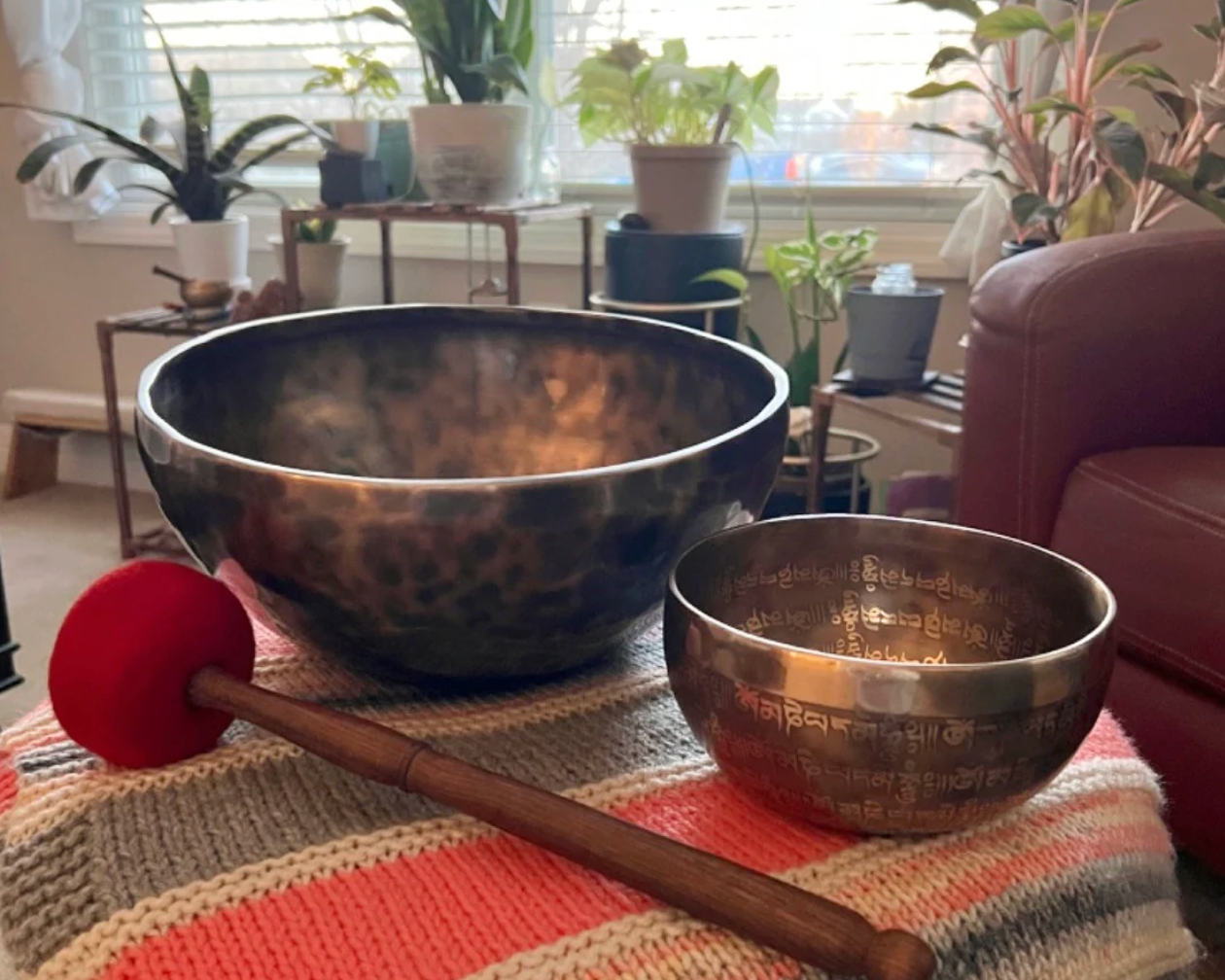
A handmade bell metal bowl ringing at full sustain, producing fourteen simultaneous inharmonic partials with beat frequencies in the theta range, is doing something specific and measurable.
The amplitude modulation reaches the inferior colliculus and activates neurons tuned specifically to that modulation rate.
The auditory cortex generates prediction errors that cannot be backgrounded.
The Default Mode Network suppresses, not through discipline but through resource competition. Five pathways of the vagus nerve activate simultaneously. Heart rate variability increases. The chemistry of chronic stress begins to shift.
This is the experience, described at the level of the mechanisms that produce it.
And these mechanisms are extraordinary.
They connect the specific mass asymmetry introduced by a craftsman's hammer in Kathmandu to the neural circuit responsible for human psychological suffering and its relief.
The bowl is enough.
And understanding what the bowl does is what we deserve.
We are at the beginning of what this field can become.
The instruments have always been here. The phenomena have always been real. The knowledge now exists to give them the explanations they deserve.
That is what we are building. And it is made of love.
Reference: The Complete Field Guide
Every major claim in therapeutic sound, examined. For each: what is real, what has no specified mechanism.
Frequency Claims
| Claim | What Is Real | What Has No Mechanism |
|---|---|---|
| 432 Hz is the natural frequency of the universe | A=432 is a coherent historical tuning preference; Verdi and others used it | No physical referent for "natural frequency of the universe"; no mechanism by which this Hz value has cosmic properties |
| 432 Hz harmonizes with the Schumann resonance | Schumann resonance (~7.83 Hz) is real and well-documented | 432/7.83 = 55.2 — not a clean musical interval; no electromagnetic coupling mechanism at Schumann field strengths (~1 picoTesla) |
| 440 Hz was promoted to cause anxiety | ISO 16 standardization in 1955 is documented history | No evidence of coordinated effort to weaponize pitch |
| 528 Hz repairs DNA | 528 Hz is a real audible frequency processed by the auditory system | DNA molecular resonances are in GHz-THz range; gap of nine orders of magnitude; no coupling mechanism; no controlled study confirms |
| Solfeggio frequencies are ancient Gregorian | These are real frequencies in the audible range | Derived by Joseph Puleo in the 1990s via numerology applied to the Book of Numbers; no ancient documentation |
| 136.1 Hz is the Om / Earth frequency | Cousto's mathematical derivation from Earth's orbital period is internally consistent | Mathematical relationship between orbital period and audio frequency does not establish causal therapeutic connection |
| Each organ has a specific healing frequency | Organs have mechanical resonances at multiple frequencies | No single frequency corresponds to an organ; no mechanism for restoring organ function through audio |
| Planetary gong frequencies carry planetary qualities | Planetary gongs have well-defined fundamental frequencies with clear acoustic relationships | No physical mechanism connecting orbital period to therapeutic quality of an audio frequency |
| Specific frequencies kill cancer cells | High-intensity focused ultrasound (MHz range, very high intensity) does destroy tumors — established clinical procedure | Therapeutic bowl and gong frequencies at therapeutic intensities have no established cancer-cell mechanism |
Bowl Construction and Authenticity Claims
| Claim | What Is Real | What Has No Mechanism |
|---|---|---|
| Seven sacred metals | Bell bronze alloy composition is genuinely critical; CuSn20 is a physical optimum in the phase diagram; trace elements do affect damping | Planetary correspondence; mercury incorporation (evaporates at 357°C); spectroscopic analysis consistently shows bell bronze only |
| Full moon casting superiority | Lunar calendars organized craft rhythms, creating consistent production batches | Moon's tidal force is ~1/10,000,000th of Earth's gravity; no measurable effect on metallurgical process |
| Maker's spiritual state is embedded in the bowl | Practitioner mental state affects physical technique, which affects acoustic output — real and important | No physical mechanism for non-physical states to alter metal properties permanently |
| Bowls absorb negative energy from sessions | The bowl's acoustic properties do not change between sessions at any measurable level | No physical mechanism for emotional states to be stored in metal |
| Machine-made bowls have no healing power | Machine-made bowls produce real sound that activates real auditory processing | The therapeutic difference is acoustic complexity — a continuum, not a binary healing/non-healing distinction |
Alchemy and Crystal Bowl Claims
| Claim | What Is Real | What Has No Mechanism |
|---|---|---|
| Alchemy bowl mineral additions produce specific healing energies | Surface coating creates mass irregularities → mode splitting → real beat frequencies; alchemy bowls are acoustically more complex than frosted bowls | Specific mineral identity (amethyst vs. platinum vs. gold) does not determine acoustic outcome; mechanism is coating distribution, not mineral energetics |
| Platinum stimulates divine feminine energy | Platinum additions slightly increase damping and alter surface properties | "Divine feminine energy" has no physical referent or measurement protocol |
| Gold connects to solar energy and self-expansion | Gold additions affect acoustic properties — increased damping, different partial balance | Solar energy correspondence has no acoustic or physiological mechanism |
| Crystal bowls resonate with silicon in the body | Silicon is present in trace amounts in structural proteins | Molecular silicon resonances are in GHz-THz range; bowl frequencies are in 100-3000 Hz range; gap of 6–9 orders of magnitude |
| Crystal bowls are made of quartz crystal | They begin as quartz sand; fused silica is acoustically exceptional due to very low internal damping | The manufacturing process melts and amorphizes the quartz, destroying piezoelectric crystalline structure; "crystal" bowls are technically glass |
| More alchemies added = more healing power | More surface additions can create more coating irregularity and potentially more beat frequency richness | The relationship is not linear; it depends on distribution, not the number or prestige of mineral types |
Physical Mechanism Claims
| Claim | What Is Real | What Has No Mechanism |
|---|---|---|
| Sound resonates with cells and heals them | Vibrotactile mechanoreceptors respond to vibration; bone conduction transmits vibration through the skeletal system — real mechanisms | Cellular molecular resonances are MHz-GHz range; six to nine orders of magnitude from audible sound; no coupling mechanism across this gap |
| The Schumann resonance synchronizes brainwaves through electromagnetic coupling | Schumann resonance is real; its frequency range overlaps with human brainwave bands | Field strength is ~1 picoTesla; neural activation requires fields many orders of magnitude larger; no established coupling mechanism |
| Emoto water crystals prove sound heals | Cymatics (Chladni patterns) is a real, reproducible physical phenomenon showing sound organizes matter at the macroscopic scale | Emoto's methodology was unblinded; no successful blind replication exists; the JREF challenge was never met |
| Sound healing works at the quantum level | Quantum mechanics is real; some quantum biological effects are under legitimate investigation | Decoherence destroys quantum superposition in biological tissue in femtoseconds; no specified quantum mechanism for therapeutic audio |
| Binaural beats and singing bowl beats are the same mechanism | Both produce real amplitude modulation effects; both are real phenomena | They engage different parts of the auditory pathway; binaural beats require headphones and are generated centrally; physical bowl beats are present in the acoustic signal and engage the inferior colliculus directly |
Chakra Claims
| Claim | What Is Real | What Has No Mechanism |
|---|---|---|
| Each chakra has a specific healing frequency | Contemplative practices associated with chakras engage real embodied attention and interoceptive processes | Four incompatible frequency assignment systems exist simultaneously; if chakras had real frequencies, systems would converge — they don't |
| Bowls can open, clear, or balance chakras | Certain acoustic stimuli produce sensations localized to body regions through interoception and vibrotactile mechanisms | Chakra "balance" is not a measurable physical state; no way to verify a chakra has been opened or cleared |
| Different notes heal different chakras | Note is a real variable affecting acoustic relationships between instruments in a set | Note is the least therapeutically significant acoustic variable by the mechanistic account; partial count, beat frequency, and sustain matter more |
Therapeutic Outcome Claims
| Claim | Evidence Status | Notes |
|---|---|---|
| Reduces anxiety | Multiple studies, consistent results, moderate quality | Most robustly supported claim; mechanism plausible and partially tested |
| Reduces depression | Emerging evidence | Mechanism plausible through DMN effects; better-designed studies needed |
| Improves sleep quality | Some evidence | Mechanism plausible through vagal activation and cortisol reduction |
| Reduces chronic pain | Some evidence | DMN suppression may reduce suffering component; nociceptive signal is separate |
| Supports cancer care as adjunct | Legitimate as quality-of-life support | Reduces anxiety and improves wellbeing during treatment; does not affect tumor biology |
| Cures cancer | No evidence | Physically implausible at therapeutic intensities; not a defensible claim |
| Repairs DNA | No evidence | Physically impossible at audible frequencies; not a defensible claim |
| Treats PTSD | Plausible mechanism | DMN and autonomic effects are relevant; rigorous study is needed |
| Boosts immunity | Indirect plausibility | Sound healing may reduce chronic stress which suppresses immunity; no direct immune mechanism is established |
This field guide will be updated as research develops. Every verdict here is a conjecture — precisely specified enough to be revised when better evidence arrives. That is the standard we hold ourselves to, and the standard we invite the field to adopt.
The Ohm Store is dedicated to the highest quality therapeutic sound instruments and the most honest understanding of what they do.