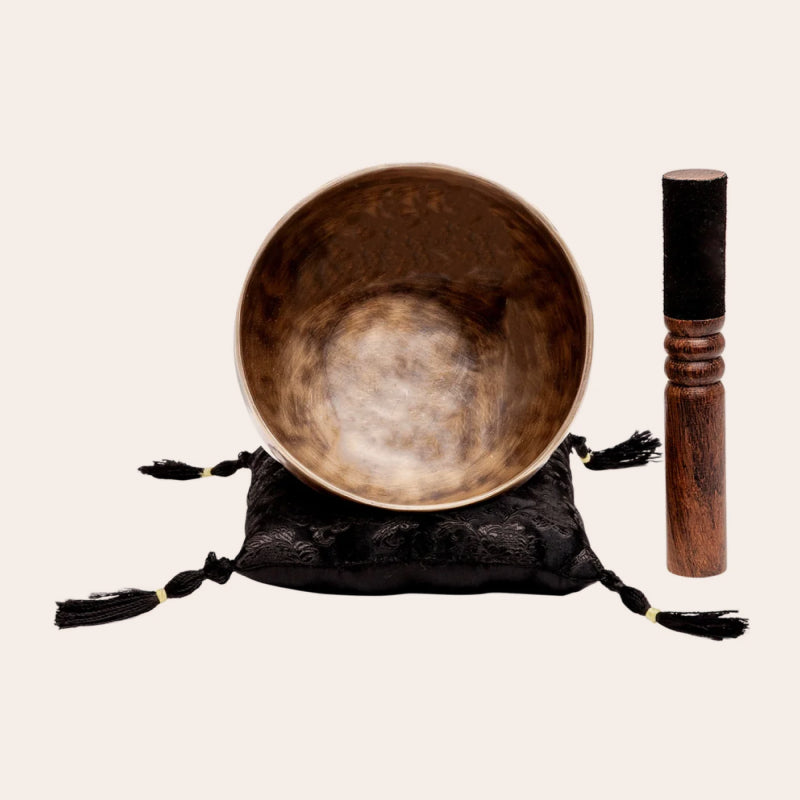
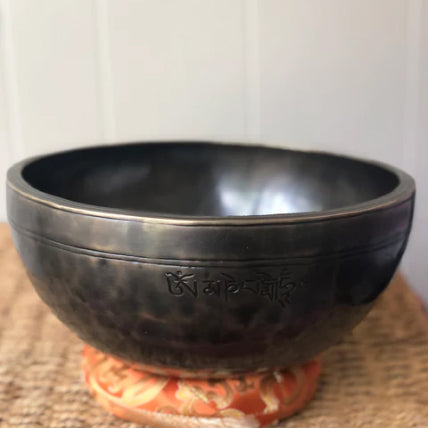




The Sacred Geometry of Bronze: Your Bowl Matters (and why)
The molecular architecture of transformation
Part 3 of our 5-part series: The Architecture of Sound
For the deep work of consciousness transformation we have found that many practitioners insist on the complex, high-tin bronze, known as traditional bell metal alloy of 78% copper and 22% tin.
The metallurgical composition of a singing bowl fundamentally determines the type of information your brain receives, so they details of the materials and the skill level of the craftsmen making them matters a greatly deal.
Let's go take a deeper exploration of this unique type of bronze alloy.
The 78:22 Ratio
Singing bowls are seemingly ubiquitous now (at least in our little corner of culture), though despite looks, the quality and tonality one can experience from any particular bowl is very different. Many modern bowls are made from alloys other than bronze—brass, mixed metals, even aluminum. Crystal bowls, made from crushed quartz, have become well loved for their pure, clear tones.
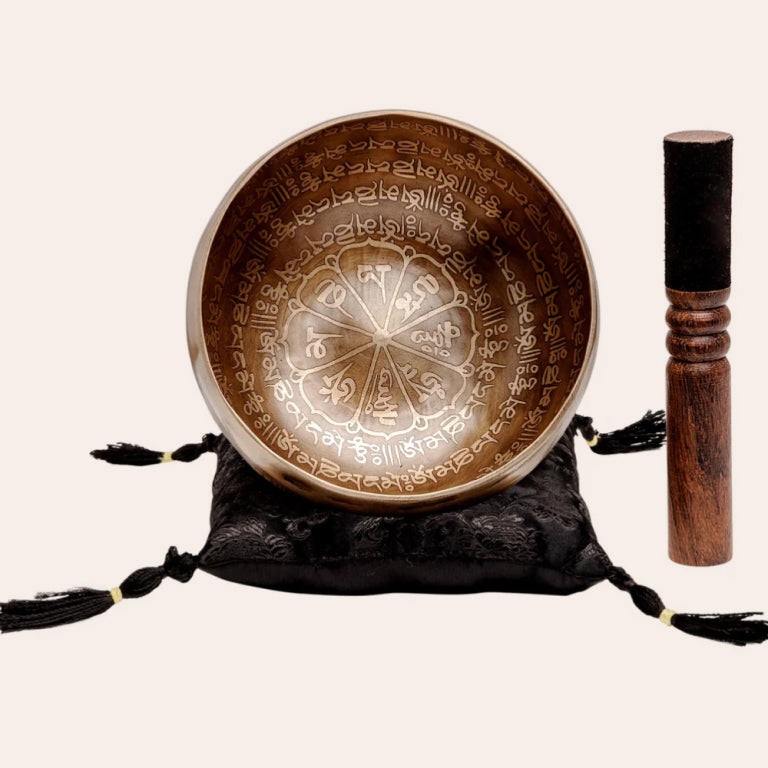
Traditional Himalayan style (can be called "Tibetan Singing Bowls" or "Sound Bowls") singing bowls follow a specific recipe: roughly 78% copper to 22% tin. Sometimes you'll see this described as a "seven-metal alloy," but according to metallurgical analysis, it's the copper-tin ratio that proves critical. The seven metal alloy is a marketing spin, and is not real.
This specific ratio creates what metallurgists call a "Beta-phase" bronze which is a molecular structure that is extremely brittle (which is why authentic bowls crack if dropped) but acoustically extraordinary.
The Molecular Lattice
When copper and tin combine in this precise proportion, they form a crystalline lattice structure at the molecular level that behaves unlike other metal alloys. This structure doesn't just vibrate, rather it produces what researchers describe as a "sheen" of overtones.
Overtones are the additional frequencies that sound above and below a fundamental note. Every musical instrument produces them, but the quantity, clarity, and mathematical relationship of these overtones vary wildly depending on the instrument's construction.
A more inexpensive metal bowl (often brass or aluminum) produces a few basic overtones, perhaps three or four frequencies sounding together. A master-quality 78:22 bronze bowl can produce dozens of overtones, layering on top of one another in hypnotic beats of sound.
Why Your Brain Can Tell the Difference
You might think a less discerning ear wouldn't notice the difference between a high-quality bronze bowl and a cheaper alternative. Your brain can tell the difference, through its pattern recognition systems.
When you hear a bowl that isn't made from bronze, it may sound more "one dimensional."
They're not mathematically coherent, and can trigger subtle stress responses. Your amygdala registers these inharmonic sounds as a kind of sonic "threat," even if your conscious mind finds the sound pleasant enough.
You might feel briefly relaxed, but you're not accessing deeper states of consciousness.
A genuine bell-metal bowl, by contrast, produces "information density"—a rich layer cake of overtones so unique that your prefrontal cortex (the brain's pattern-recognition and executive function center) becomes overwhelmed in the best possible way.
Faced with this avalanche of coherent harmonic information, the analytical mind essentially surrenders. It stops trying to parse, categorize, and control. The first level of "surrendering" that often feels so hard for new meditators.
The Crystal Bowl Conundrum
Crystal—specifically quartz crystal—produces a pure tone with minimal overtones. It's acoustically "clean." The drone sounds are wonderful, they are incredibly visually appealing and easy to play, but this purity is less dimension-rich than the sounds of a bronze bowl.
It's the difference between a monotone voice and a symphony. Both can be pleasant, but only one provides the information complexity believed necessary to trigger genuine consciousness shifts.
Crystal bowls have their place—they're excellent for creating ambient soundscapes, and their pure tones can be meditative in a straightforward way. But for the kind of deep transformation this framework describes, they may be insufficient.
The Overlapping Sheen
When a high-quality bronze bowl is invited to sing, listen closely to what happens. The sound doesn't simply ring out and fade. It builds. Overtones bloom and overlap, creating a shimmering effect that seems to hang in the air like incense.
This "sheen" is the molecular lattice speaking. Each particle in the bronze is vibrating in complex sympathy with every other particle, and the specific 78:22 ratio ensures these vibrations reinforce rather than cancel each other.
The result is a sustained richness that can last for minutes after a single strike in a a gradual unfolding of harmonic information that your nervous system can entrain to, layer by layer.
Choosing Your Instrument
If you're shopping for a singing bowl, here's what to know:
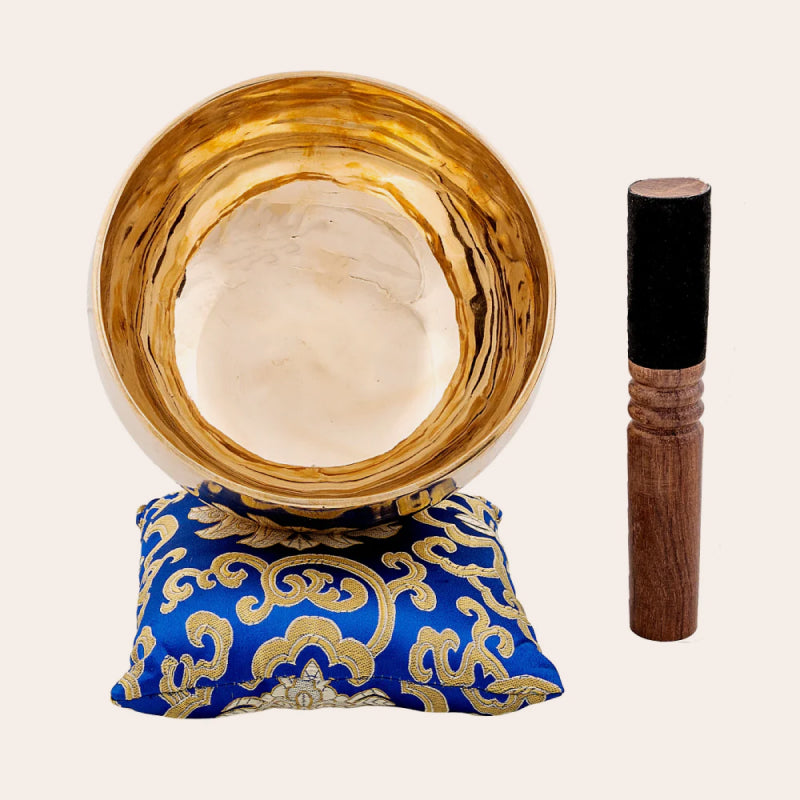
Look for: Hand-hammered construction (not machine-spun nor hand cast), weight (genuine bell metal has substantial heft), and most importantly, listen to the overtone structure. A quality bowl will continue revealing new layers of sound as it rings, not just fading volume but actual harmonic evolution.
Be wary of: Bowls that claim to be "seven-metal," perfect machine symmetry (handmade bowls have subtle irregularities that contribute to their acoustic complexity), and marketing that emphasizes the inexpensive price as the sole determinant factor.
The test: Invite the bowl to sing and listen for at least 30 seconds.
Does the sound evolve? Do you hear multiple tones emerging and interweaving? Does your body respond with subtle shifts in attention or sensation?
Beyond the Bowl
The principle extends beyond singing bowls to all sound healing instruments. The material matters because the material determines the information. Whether you're working with gongs, tuning forks, or bells, the alloy, the construction, and the craftsmanship all contribute to whether you're producing simple sound or complex harmonic information.
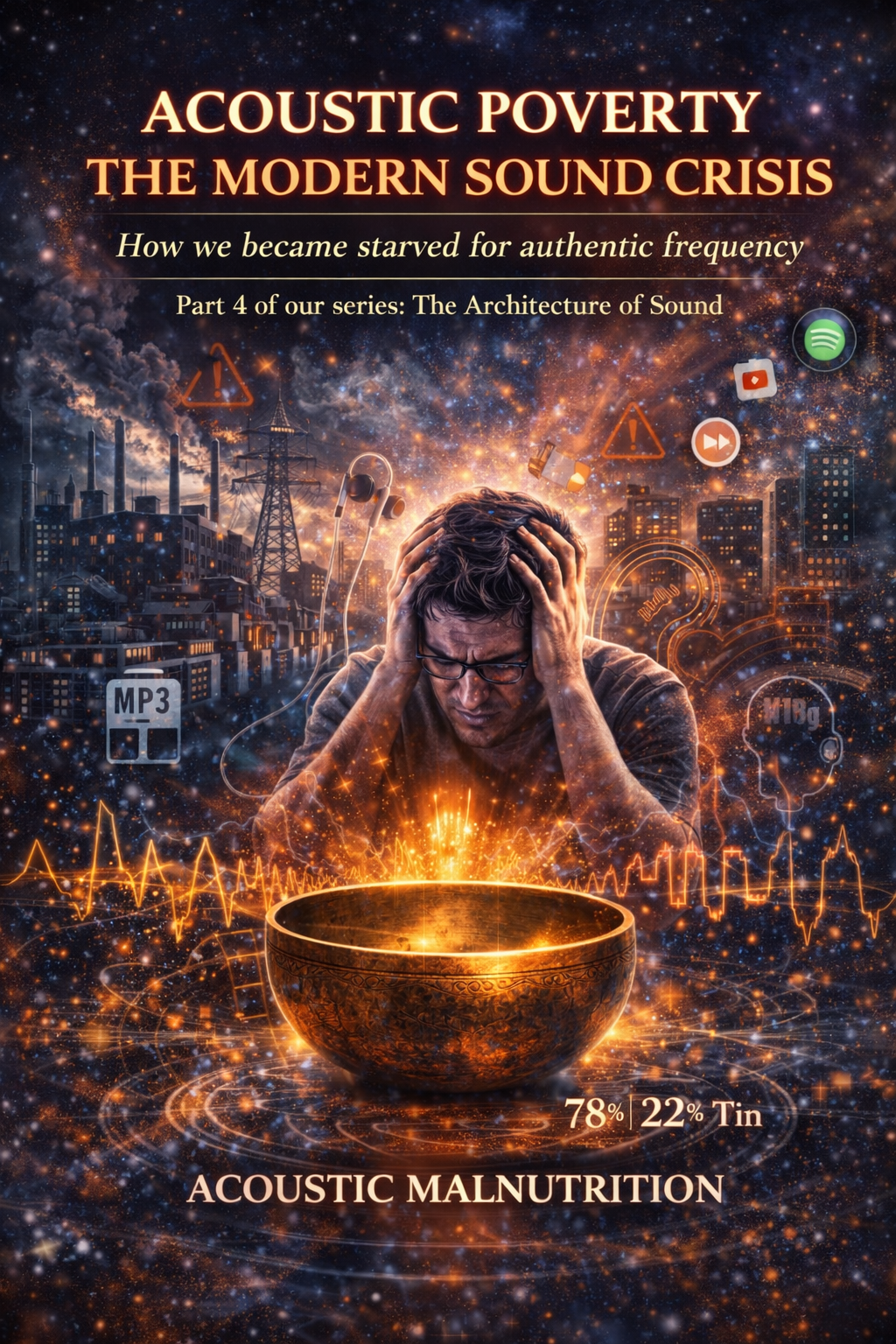
In our next article, we'll examine the flip side of this equation: how the modern world has created what can be called "acoustic poverty," and why so many of us are starving for genuine harmonic nourishment.
The bronze bowl is a solution. But first, we need to understand the problem.
If you'd like to shop our line of curated, custom designed bell metal bronze singing bowls we'd welcome the chance to get you an authentic creation. You can begin to listen to the sounds, and browse here.
You may always email us at hello@theohmstore.co -- this is the first stop, in our concierge team, and we're ready to personally help advise you, and match you with your forever bowl.
Next in the series: "Acoustic Poverty: The Modern Sound Crisis"
The Ohm Store specializes in authentic bronze singing bowls crafted using traditional techniques and alloy ratios. Our staff can guide you in finding an instrument that matches your practice depth and intention.