How does sound actually transform consciousness? The answer lies in a fundamental law that governs everything — entrainment.
The Pendulum Effect
In 1665, Dutch scientist Christiaan Huygens noticed something peculiar. He had several pendulum clocks mounted on the same wall of his workshop, each ticking at its own rhythm. When he returned the next day, all the pendulums had synchronized — swinging in perfect unison.
Huygens had discovered entrainment: the tendency of oscillating systems to synchronize when they're in proximity to each other. The clocks weren't broken. They were obeying a law of physics. The stronger oscillator pulls weaker oscillators into its rhythm.
Here's the profound part: your brain is an oscillating system. Your neurons fire in rhythmic patterns, creating measurable brainwave frequencies. Place your brain in proximity to a powerful acoustic source — a quality singing bowl — and the physics take over. Your brainwaves begin to entrain to the sound.
The Brainwave Spectrum
Your brain produces electrical activity at different frequencies. Most of us spend our waking hours locked in Beta — the state of doing, analyzing, worrying. Beta is useful. But Beta, unchecked and unrelenting, is exhausting.
Meditative traditions, contemplative practices, sound healing work — all of it aims at shifting you from Beta into Alpha and Theta. This is where insight happens, where healing occurs, where the sense of separate self temporarily dissolves.
But here's the catch: you can't think your way into Theta. The very act of trying keeps you in Beta. It's like trying to fall asleep by concentrating hard on falling asleep — the effort defeats itself.
Enter sound.
From Beta to Theta
When you're exposed to a powerful, coherent sound source like a properly played singing bowl, your brainwaves begin to entrain to the frequency of the sound. Not because you're trying. Not because you believe it will work. Because physics demands it.
Beta gives way to Alpha. The analytical chatter softens. You notice yourself taking deeper breaths without deciding to. The sound deepens, grows richer. Alpha dissolves into Theta. You lose track of time. Thoughts arise but don't stick. You're still conscious — but consciousness feels different: more spacious, less personal, profoundly peaceful.
You didn't get there through willpower or technique. The sound guided you there by physically entraining your neural oscillations to its rhythm.
Why the Source Matters
Your brain entrains to whatever sound is present. In a chaotic office, you entrain to chaos. Around agitated people, you entrain to agitation. And if your instrument lacks coherent harmonic structure, you're entraining to something less than optimal.
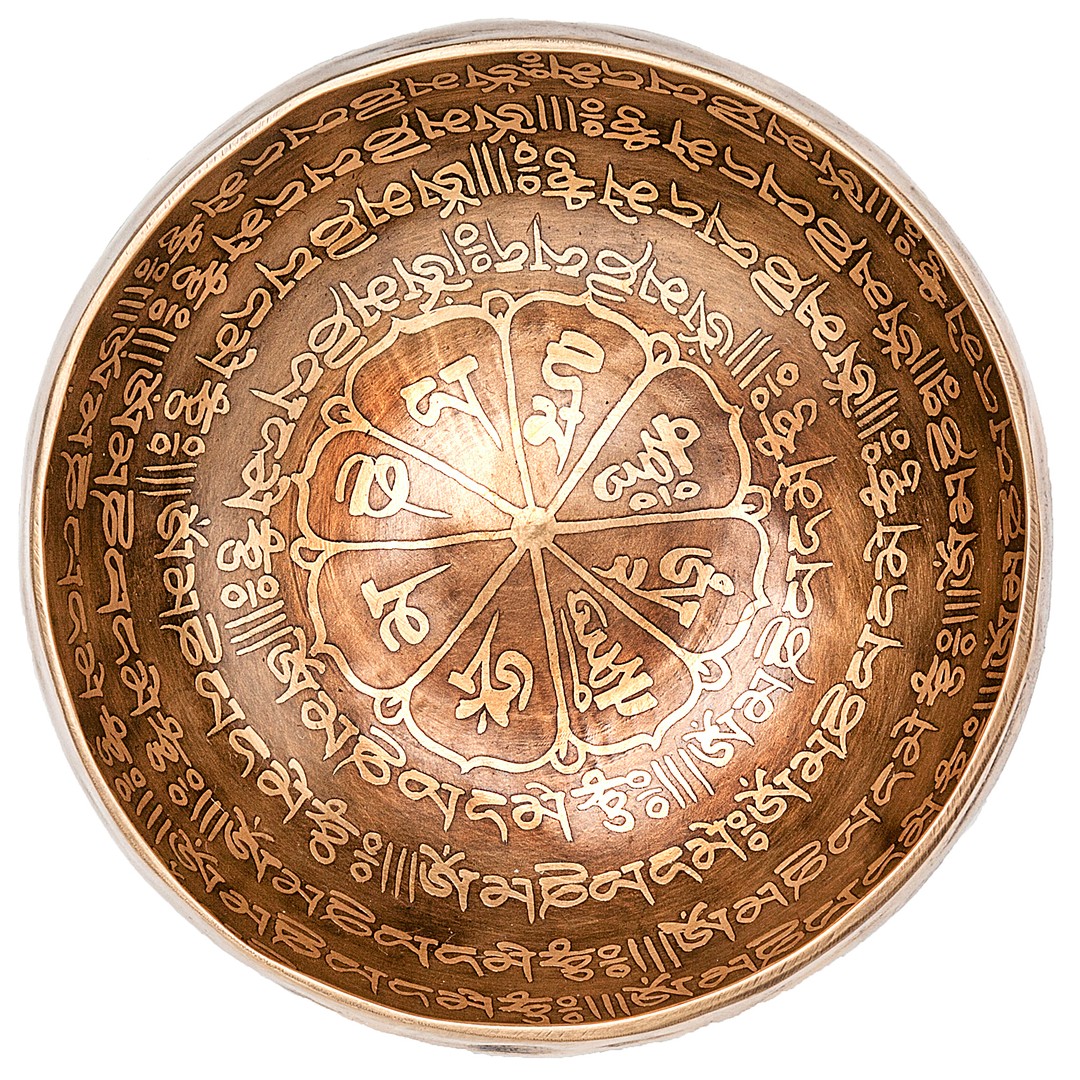
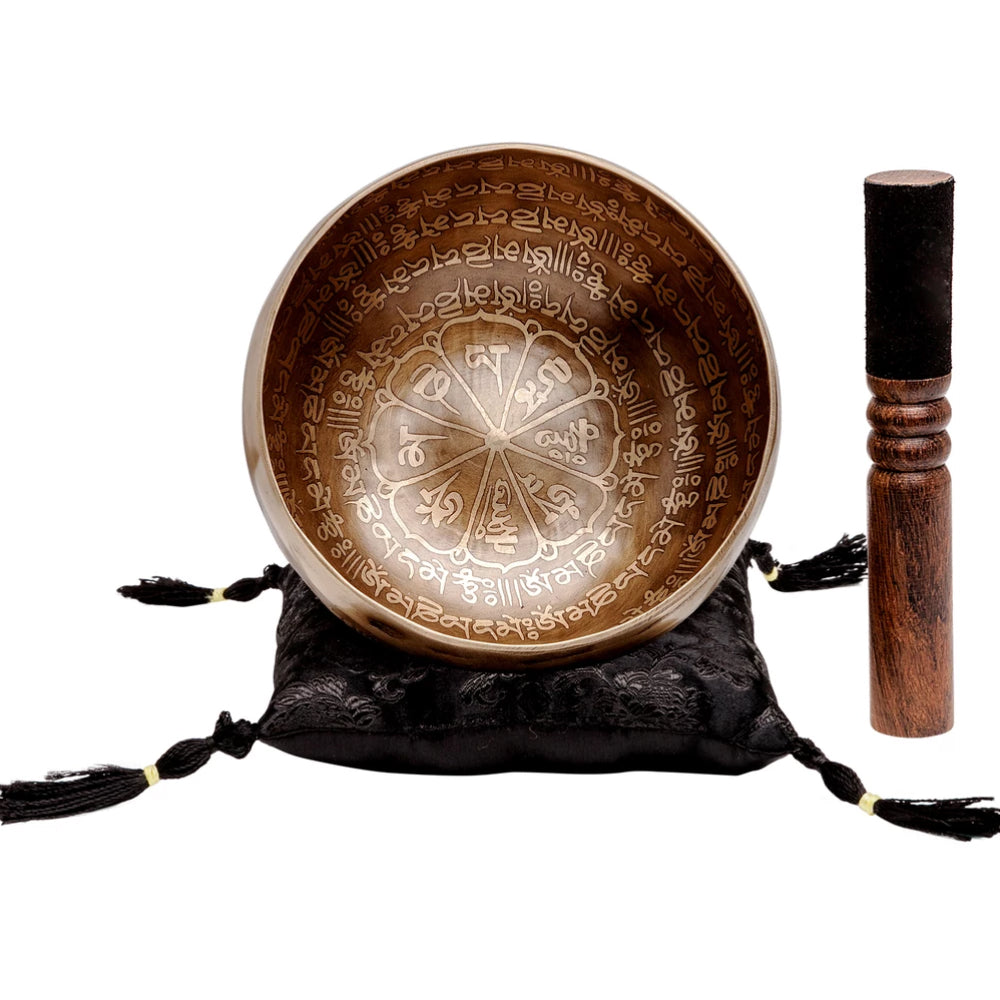
This is where handmade construction stops being romantic and starts being mechanical. A hand-hammered bronze bowl carries slight mass asymmetries from the artisan's hammer. Those asymmetries split each vibrational mode into two closely spaced frequencies, and their interaction produces slow, pulsing beat frequencies — the "wah-wah" you can hear and feel — landing squarely in Delta and Theta territory. The irregularity of a handmade bowl is its exact mechanism of action.
There's also a moment practitioners call the Surrender Point: the rich, interwoven overtones of a quality bowl present your pattern-recognition machinery with more than it can parse. The analytical mind gives up. And in that surrender, meditation spontaneously arises — not as effort, but as the absence of it.
Press play. Notice what happens to your breathing within 30 seconds.
This recording captures the auditory channel only. The vibration you feel in your chest and hands requires the physical instrument.
Working With Entrainment: A Simple Practice
You've read the theory. But none of it means anything until you experience it directly. The invitation is to find a bowl that resonates with you, sit with it in silence, and invite it to sing.